Gone are the days, you need a physical office or store to sell your services or goods. Nowadays, all you need is a website to reach global audience for selling your stuffs and collecting payments. Though it’s easier to say that, the problem comes when you search for an ecommerce website builder to launch your online store. You will be overwhelmed with the vast variety of site builders available. Here are the top 10 ecommerce website builders with their features, pros, cons and ideal use cases for you to make an informed decision.
Factors to Consider
If you are an individual business owner, it will be a difficult task to test each site builder’s features to find the best option for you. To avoid distraction, decide the followings and focus on the website builders offering those features:
- Type of product: Selling physical and digital items are completely different and you to setup your store accordingly. For example, you need to consider shipping routes, taxes and inventory for managing physical goods, which may not be needed for digital stuffs.
- Size of Your Store: Have an idea of the total number of items you plan to sell through your store. This is necessary to decide the online storage space and look for bulk product management features.
- Target Customers: Decide whether you want to sell to local customers in your geographical location or target for global reach.
- Budget: Allocate sufficient recurring budget, generally per month.
With those points in the mind, here are the top ecommerce website builders available for you. We provide overview of each site builder, make sure to check the official websites for the latest information (especially pricing details, as they are subjective to change).
1. Shopify
Shopify remains the gold standard for ecommerce platforms. Known for its simplicity and scalability, Shopify caters to all types of businesses, from startups to global brands (of all sizes). Its drag-and-drop design interface and extensive third-party app ecosystem make creating and managing a store effortless.

- Fully hosted platform with fast and reliable performance. Build and customize an online store using AI tools, themes, and drag-and-drop editors.
- Shopify App Store offers more than 8000 apps to integrate any feature you want (for example – TikTok Shop or Mailchimp email marketing).
- Manage shipping, labeling, and fulfillment, including discounted rates and third-party logistics.
- Manage shipping, labeling, and fulfillment, including discounted rates and third-party logistics.
- Sell on external channels including social media and marketplaces, and sync in-person sales with Shopify POS.
- Use marketing tools and analytics to understand customers, run campaigns, and recover abandoned carts.
- Accept multiple payment methods with a secure checkout.
Pros:
- Easy to use for beginners.
- Scalable for growing businesses.
- 24/7 customer support.
Cons:
- No free plan though 3-days free trial is available.
- High transaction fees unless using Shopify Payments.
- Limited flexibility for advanced customizations without coding.
2. Wix eCommerce
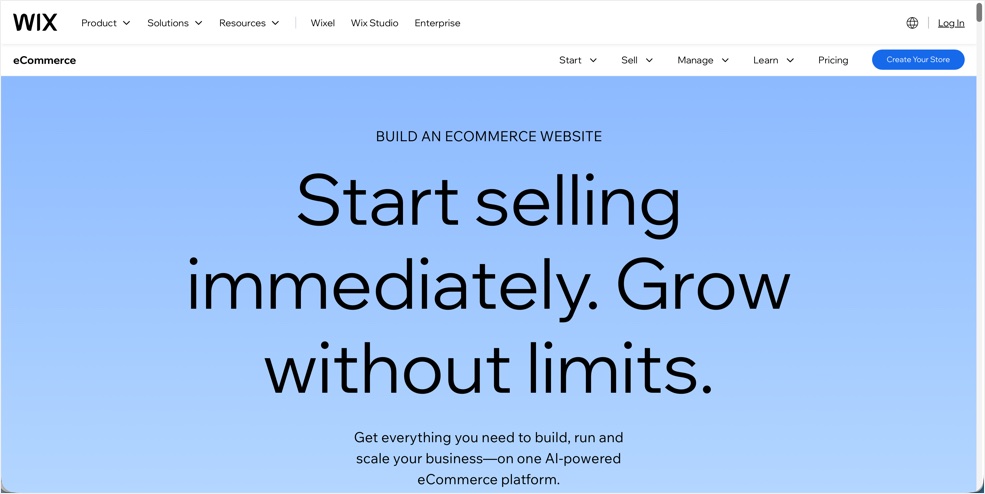
Wix eCommerce combines the design freedom of Wix with robust tools for selling online. You can use the drag-and-drop editor to build a site from scratch or use the AI site builder. This platform is perfect for small and medium-sized businesses looking for an affordable solution that prioritizes aesthetic appeal and functionality.
- Choose from hundreds of eCommerce-specific templates to sell physical, digital, drop-shipping, print-on-demand products and subscriptions.
- Full set of AI features for generating images, product descriptions and showing product recommendations.
- Manage orders and inventory from a central dashboard with analytics and reporting tools to track sales performance.
- Sell across multiple channels including marketplaces and social platforms while keeping everything synced in one place.
- Support international selling with multilingual sites, currency converters, and wide payment provider support including Wix Payments.
- Use built-in marketing tools for SEO, email campaigns, and analytics to attract and retain customers. You can also install apps from Wix App Market to add additional features to your store.
Pros:
- Extremely user-friendly interface.
- Affordable pricing for startups and small businesses.
- Large library of third-party apps.
Cons:
- Not as feature-rich as Shopify for larger operations.
- Limited scalability for high-volume sellers.
3. BigCommerce
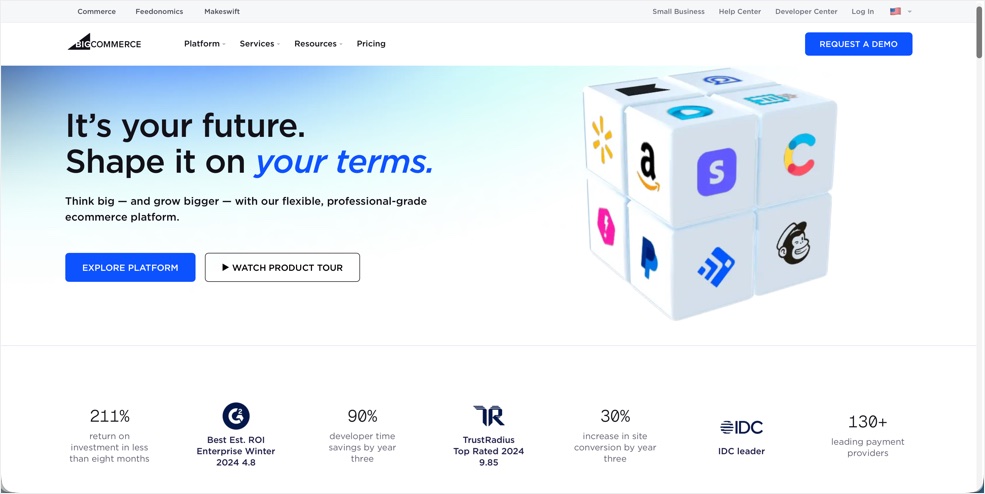
BigCommerce is a robust platform for managing Business to Business (B2B) and Business to Customers (B2C) stores primarily targeting enterprises. With a focus on scalability, it offers powerful tools for managing complex catalogs and high-volume sales. BigCommerce is ideal for growing businesses that need advanced features.
- Create site with the drag-and-drop page builder and responsive themes.
- Multi-channel selling across marketplaces and social commerce channels with centralized data sync.
- Headless commerce support and composable architecture for flexible front-end and backend integrations.
- Multi-storefront capability allowing one account to manage multiple distinct storefronts.
- Checkout and payment flexibility with support for 130+ payment providers and optimized one-page checkout.
- Built-in marketing, SEO, and analytics tools for conversion optimization and performance tracking.
Pros:
- Ideal for scaling businesses.
- Comprehensive features for managing large stores.
- Multi-currency and multi-language support for global operations.
Cons:
- Expensive for small businesses.
- Steeper learning curve for beginners.
4. Squarespace Ecommerce
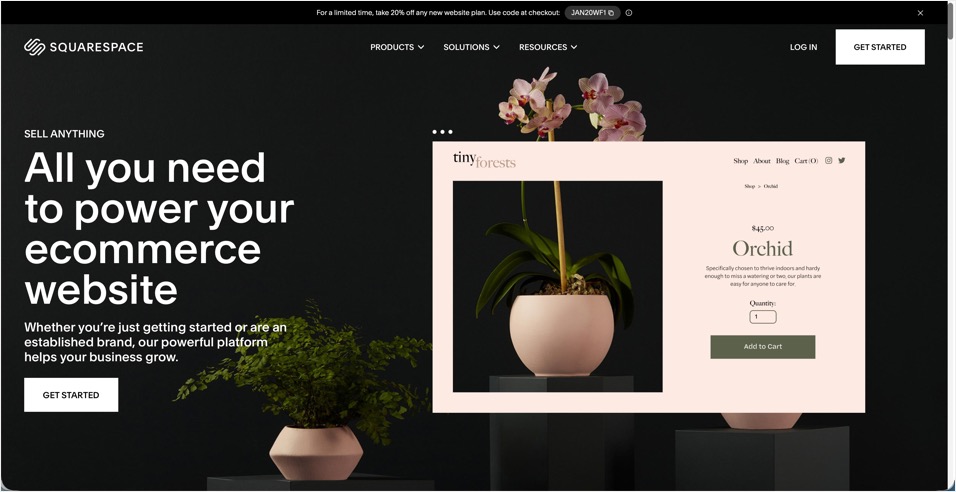
Squarespace Ecommerce stands out for its beautiful, award-winning templates. It’s an excellent option for creatives and small business owners who want an elegant, minimalist design for their online stores. You can build and a fully functional online store with customizable templates and sell both physical products and digital goods.
- Use Squarespace AI to generate product descriptions and assist with content creation for your store.
- Showcase products with flexible product pages and allow customers to add items to a cart and complete checkout.
- Configure flexible shipping options including flat rate, weight-based, and real-time rates.
- Integrate with commerce tools and services such as payment providers (Stripe, PayPal), shipping services (FedEx, USPS, UPS), financing options (Afterpay, Klarna), and business tools (Xero, TaxJar).
- Collect and display product reviews to build customer trust.
Pros:
- Stunning design capabilities.
- All-in-one platform with hosting and domain management.
- Affordable pricing tiers.
Cons:
- Limited third-party integrations.
- Not ideal for large-scale ecommerce.
5. WooCommerce for WordPress
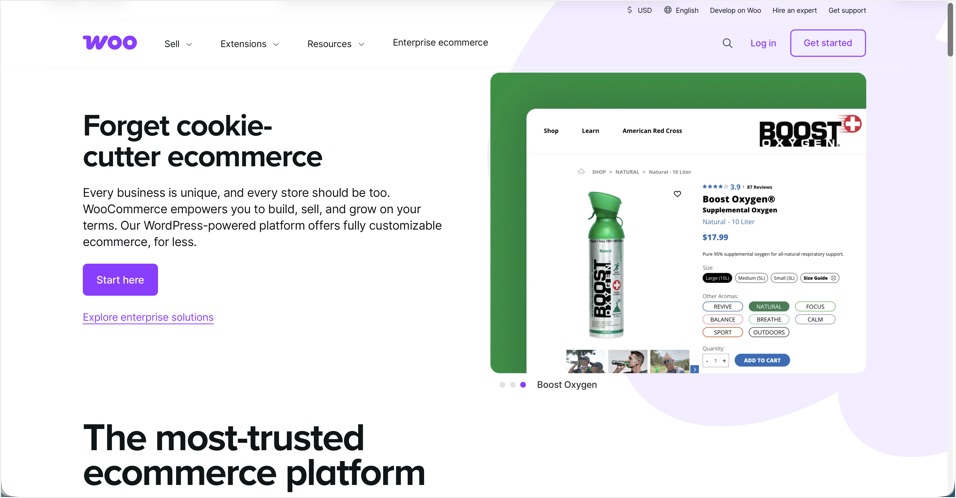
WooCommerce is a plugin for WordPress, making it the go-to choice for businesses already using the WordPress ecosystem. It’s open-source, offering complete flexibility for customization. This is a complete free plugin with optional premium add-ons to enhance the store features (like adding recurring subscriptions). Unlike Shopify or Wix, you need to purchase a separate hosting plan for running your WordPress.org website. Alternatively, you can go for a hosted setup like WordPress.com, which may limit your ability to manage the setup (like accessing the server).
- Best option if you like the WordPress setup and want to integrate an online store to you existing blog.
- You can customize the site with thousands of free and paid themes and plugins available through the WooCommerce Marketplace and WordPress ecosystem.
- Sell a wide range of product types including physical products, digital downloads, services, subscriptions, bookings, and memberships.
- Offer flexible, secure payment options with built-in support and integration for dozens of gateways such as Stripe, PayPal, Apple Pay, Google Pay, and others.
- Use detailed analytics and reporting to monitor sales performance, popular products, customer behavior, and store metrics.
- Translate content and support selling in multiple currencies for international customers.
Pros:
- Extremely flexible and customizable.
- No platform fees (you only pay for hosting and plugins).
- Strong community support.
Cons:
- Only works with WordPress and requires technical skills for optimal use.
- Need a strong hosting and store maintenance, updates, and security are your responsibility.
6. Weebly Ecommerce by Square
Weebly, now part of Square, is a straightforward ecommerce platform ideal for small businesses and entrepreneurs. Its integration with Square makes it an excellent choice for businesses with both physical and online stores.

- Drag-and-drop website builder with customizable themes to create a fully functional online store.
- Real-time shipping rates for domestic and international orders. You can create discount incentives using coupons and gift cards to boost sales.
- Abandoned cart and welcome email templates to engage customers. Also, provide product search and badges to easily find items.
- Add features from third-parties using App Center.
- Display customer reviews on product pages to build trust and increase conversions.
- Accept payments through integrated checkout with support for Square, Stripe, and PayPal.
Pros:
- Simple to use with quick setup.
- Affordable for startups and small businesses.
- Strong integration with Square hardware and software.
Cons:
- Limited features for large businesses.
- Fewer design templates compared to competitors.
- Square Online and Weebly uses the same backend, which may be confusing some users.
7. Adobe Commerce (Magento)
Magento, now Adobe Commerce, is a robust platform for enterprise-level ecommerce. It’s highly customizable and packed with advanced features, making it a top choice for large-scale businesses.

- Provides a flexible, scalable enterprise ecommerce platform for both B2C (business to consumer) and B2B (business to business) commerce from a single backend.
- Supports multi-channel commerce enabling unified shopping experiences across web, mobile, marketplaces, and other digital touchpoints.
- Built-in personalization and AI-driven commerce capabilities to create data-driven, customized customer experiences.
- Enterprise-grade architecture that scales with business growth, handling large catalogs, high traffic, and global operations.
- Extensive product and catalog management supporting complex inventories, multi-site, multi-brand, multi-currency, and multi-language storefronts.
- AI-powered search, product recommendations, and merchandising tools to increase conversions and engagement.
- Content authoring tools including drag-and-drop page builder and rich media support for dynamic storefront content.
- Commerce analytics and reporting capabilities to track sales performance, customer behavior, and merchandising effectiveness.
Pros:
- Highly customizable and feature-rich.
- Excellent for large-scale operations.
- Strong security features.
Cons:
- Steep learning curve.
- Expensive, especially for the enterprise version.
- Custom pricing with no standard plans.
8. Square Online
As mentioned above, Square Online is another platform from Square payments site using the same Weebly backend. You can build an online store or ecommerce website using Square’s website builder with customizable themes and layout tools. It’s a beginner-friendly ecommerce solution for small businesses and retailers already using Square’s point-of-sale ecosystem.
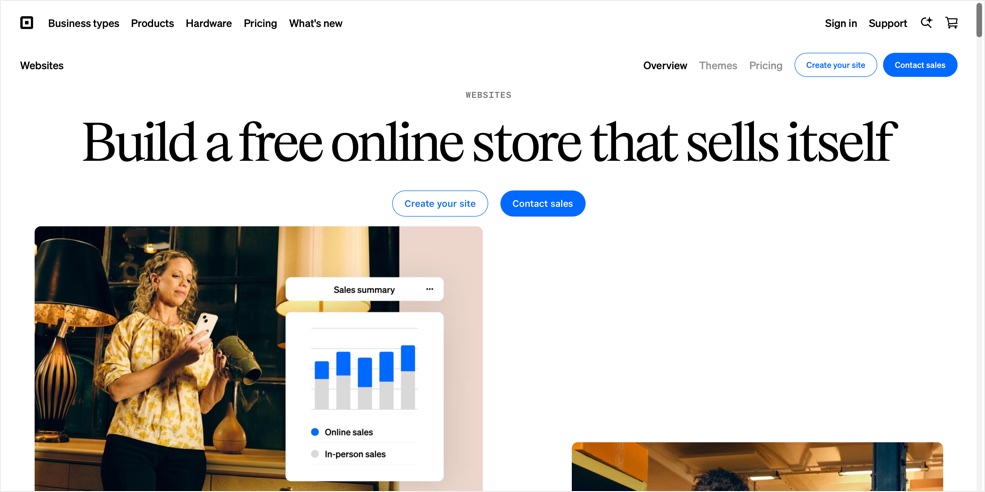
- Seamlessly integrate with Square Point of Sale to unify in-person and online sales data.
- Manage inventory across all sales channels from a single system to avoid overselling.
- Track customer information including purchase history and loyalty points in a centralized directory.
- Configure fulfillment options including standard shipping, local delivery, and in-store pickup with real-time shipping rates.
- Use built-in SEO tools to improve search engine visibility and connect your site with Google and Meta for broader reach.
- Reward customers and encourage repeat business through an integrated rewards program.
Pros:
- Easy to use site builder with Square AI integration.
- Possibility to sync with Wix Online Store.
Cons:
- Limited scalability and advanced features.
- No app ecosystem compared to competitors.
9. Ecwid
Ecwid is a flexible ecommerce solution that allows you to add and run an online store either by embedding Ecwid into an existing website or by building a new storefront with the built-in Instant Site builder. It’s perfect for small businesses that don’t want to start from scratch.
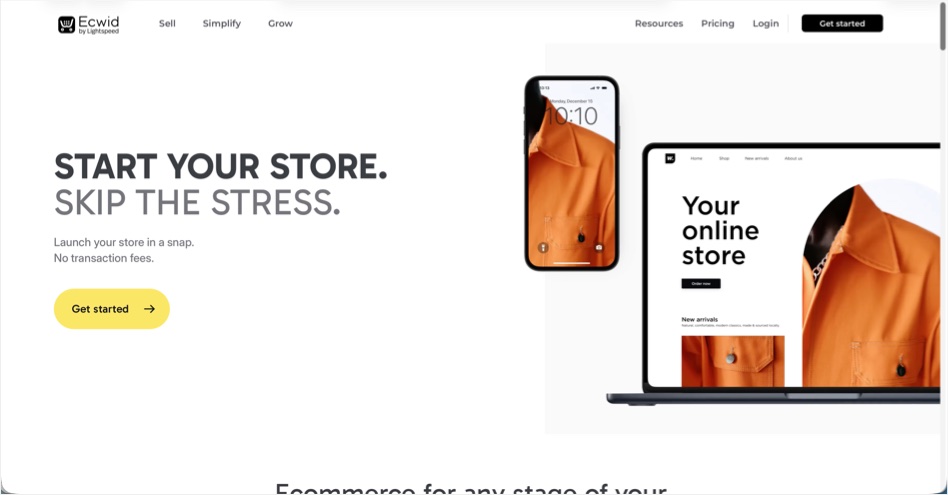
- Manage products, inventory, and orders from a centralized dashboard with tools for product categories, images, descriptions, and stock control.
- Accept secure online payments via multiple payment providers and gateways without additional transaction fees from Ecwid.
- Connect and manage multi-channel sales across websites, social media platforms such as Facebook, Instagram, TikTok, and major marketplaces like Amazon and eBay from one system.
- Use automated ecommerce tools including tax calculations, abandoned cart reminders, automated emails, and promotional campaigns.
- Get extensions through the Ecwid App Market to extend functionality for marketing, analytics, and operational tasks.
- Offer built-in analytics and reporting to track store performance, sales trends, and customer activity.
Pros:
- Easy to integrate with existing websites.
- Affordable pricing tiers.
- Great for small-scale sellers.
Cons:
- Not ideal for creating standalone stores.
- Limited customization compared to other platforms.
10. Volusion
Volusion is a long-standing ecommerce platform known for its reliability and straightforward tools. It’s best for small to medium-sized businesses.

- Built-in SEO and marketing tools.
- Secure payment processing and PCI compliance.
- Inventory and order management tools.
- Mobile app for managing your store on the go.
- Multiple payment gateway integrations.
Pros:
- Easy-to-use interface.
- Affordable pricing for small businesses.
- Strong focus on data security.
Cons:
- Fewer customization options.
- Limited advanced features for scaling.
Summary of Top 10 Ecommerce Website Builders
Below is the summary along with the starting monthly price for using the store without ads and with a custom domain. Prices are as of publication date of this article and for the annual plan. Note that the features explained above may need higher level plan.
| Ecommerce Builder | Starting Price /month | Plan Features | Ideal For |
|---|---|---|---|
| Shopify | $29 Basic Plan | Unlimited products, 10 inventor locations, live chat support | Businesses of all sizes that need a simple, reliable, and scalable ecommerce solution. |
| Wix eCommerce | $17 Light Plan | Unlimited products, 1-year domain, 2GB storage | Small businesses and individuals who want a visually appealing store without extensive technical know-how. |
| BigCommerce | $29 Standard Plan | Unlimited products, 4 inventory locations, $50K revenue | Medium to large businesses that require advanced features and scalability. |
| Squarespace Commerce | $16 Basic Plan | 1-year free domain, Squarespace AI and Squarespace Payments | Creative entrepreneurs and small businesses seeking a visually striking online presence. |
| WooCommerce for WordPress | Free Plugin | Unlimited products, popular payment gateways. | Businesses using WordPress or those that require full control over their online store. |
| Weebly by Square | $12 Professional Plan (without ads) | 1-year domain, unlimited products, built-in marketing tools. | Brick-and-mortar stores looking to expand online or small businesses seeking an easy, affordable ecommerce solution. |
| Adobe Commerce | Custom pricing | Enterprise level store management | Large businesses with technical resources that require advanced features and scalability. |
| Square Online | $49 Square Plus Plan | Custom domain, QR code ordering, Wix Online Store sync | Startups and entrepreneurs looking for an affordable, easy-to-use platform. |
| Ecwid | $25 Venture Plan | 100 products, custom domain, App Market | Businesses that want to add ecommerce capabilities to their existing sites. |
| Volusion | $35 Personal Plan | 100 products, $50K Gross Merchandize Volume, 1 staff account | Small to medium-sized businesses looking for a simple and secure ecommerce solution. |
Conclusion
Each of these ecommerce website builders has unique strengths and is tailored to different needs. Whether you are a beginner seeking simplicity or a large enterprise needing advanced features, there is a platform on this list for you. As mentioned, evaluate your business needs and calculate the budget you can allocate monthly to choose the best website builder for your online store.