
These days, there is an AI chatbot for almost everything, from personal assistance to professional tasks. You can ask chatbots to explain complicated topics, write emails, generate ideas, solve problems, create content, and even help with computer programming. While chatting with an AI may feel like talking to a helpful friend, there is an important difference. You should not assume that everything you share with a chatbot will remain completely private.
Depending on the AI service, your conversations may be stored, reviewed for safety, or used to improve the service. Even when a company promises to protect your data, sharing sensitive information unnecessarily can create privacy and security risks. So, what should you avoid sharing with an AI chatbot? Here are 10 types of information you should keep private when using AI tools.
1. Passwords and Login Credentials
Never share your passwords with an AI chatbot, even if you need help accessing an account or fixing a login problem. Your passwords protect your email accounts, social media profiles, online banking, shopping accounts, and other important services. If someone gains access to them, they could impersonate you, steal information, or misuse your accounts.

For example, if you are having trouble connecting your website to an API, you might be tempted to paste your entire configuration file into a chatbot. However, that file could contain secret keys or database credentials. A safer approach is to replace sensitive values with placeholders before sharing the code. The chatbot can still help you understand the code without seeing your real credentials. You should also avoid sharing:
- One-time passwords (OTPs) and verification codes
- Password reset links
- API keys and access tokens
- Database passwords
- Private SSH keys used to access servers
- Recovery codes for two-factor authentication
Remember that a legitimate AI assistant does not need your actual password to explain how to reset it.
2. Bank Details and Financial Information
AI chatbots can help you understand financial concepts, create budgets, and explain how different financial products work. However, you should avoid sharing information that could expose your money or financial identity. Keep the following details private:
- Complete credit or debit card numbers
- Card security codes (CVV or CVC)
- Bank account numbers
- Online banking login details
- Payment authentication codes
- Sensitive financial documents containing personal identifiers
Imagine asking an AI chatbot to help you understand your monthly expenses. You do not need to upload an unedited bank statement containing your full account number, address, and other identifying information. Instead, remove those details and share only the transaction descriptions, dates, and amounts needed for the analysis.
If you need help calculating your spending, a simple table showing categories such as groceries, transport, rent, and entertainment is usually sufficient. The goal is to give the AI enough information to complete the task without exposing your financial identity.
3. Government Identification Numbers and Personal Documents
Government issued identification numbers can be especially valuable to criminals because they may be used in identity theft or fraudulent applications. Avoid sharing your full:
- Social Security number (SSN)
- Passport number
- Driver’s license number
- National identification number
- Tax identification number
- Government issued identity documents
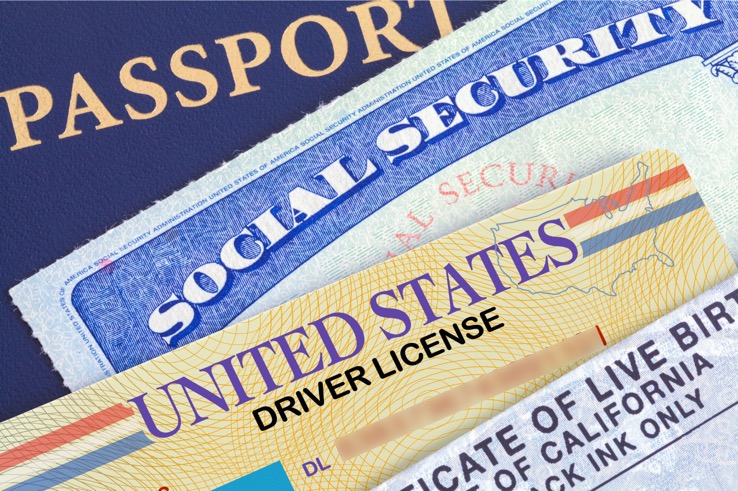
You should also be careful when uploading photographs or scans of passports, identity cards, tax returns, and other official documents. For example, if you want help understanding a tax form, you can often upload a redacted copy with your name, identification numbers, address, and other unnecessary personal details removed. If a form contains information about several people, remember to protect their details as well.
4. Your Home Address and Real-Time Location
Your location may seem harmless to share, especially when asking for travel recommendations or directions. However, repeatedly revealing your movements and personal routines can create privacy and safety risks. Be cautious about sharing:
- Your complete home address
- Your current precise location
- Your daily travel schedule
- Details about when your home will be empty
- Your workplace address when it is unnecessary
- Information that reveals where children go to school
For example, you might want an AI chatbot to suggest places to visit during a weekend trip. In such a case, you can provide the city or neighborhood instead of your full home address. Similarly, if you need help planning a commute, you can share approximate starting and ending locations rather than your exact residential address.
Note: There are situations in which a precise location is genuinely necessary, such as finding nearby emergency services. Even then, consider which service you are using and what information you need to provide.
5. Private Information About Other People
AI chatbots make it easy to summarize conversations, analyze documents, and draft messages. But you should think carefully before sharing another person’s confidential information. Here are some examples you should avoid sharing:
- A friend’s private messages
- A colleague’s salary or performance review
- A customer’s contact details
- A patient’s medical records
- A student’s personal information
- Confidential business correspondence
- Private photographs or recordings
Suppose a colleague sends you a confidential email about a workplace problem. You want an AI chatbot to help you write a response. Rather than pasting the entire email with the colleague’s name, contact details, and confidential information, remove identifying details and share only the relevant context.
For businesses, this is particularly important. Customer databases, employee records, and internal company documents may be protected by contractual obligations, workplace policies, or privacy laws. Before uploading such information, check whether your organization permits the use of that AI service for the relevant data.
Just because someone shared information with you does not mean you have permission to share it with an AI system. Your privacy is not the only privacy that matters.
6. Medical Records and Highly Sensitive Health Information
AI chatbots can explain medical terminology, describe common symptoms, and help you prepare questions for a healthcare professional. However, you should be cautious about sharing identifiable medical information. This may include:
- Complete medical records
- Laboratory reports containing identifying details
- Prescription documents showing your personal information
- Health insurance identification numbers
- Detailed mental health records
- Medical photographs that reveal your identity
- Information about another person’s health

For example, if you want to understand a laboratory report, you may be able to remove your name, date of birth, patient identification number, and other identifying details before sharing the relevant results. Keep in mind that removing your name alone does not always make a document anonymous. A combination of dates, locations, unusual medical conditions, and other details may still identify someone.
7. Confidential Business Information and Trade Secrets
AI tools can help businesses write reports, analyze data, develop software, and generate marketing ideas. But uploading confidential business information to an AI service without authorization can expose an organization to serious risks. Avoid sharing sensitive material such as:
- Unreleased product designs
- Confidential business strategies
- Proprietary source code
- Internal financial forecasts
- Customer databases
- Trade secrets
- Confidential contracts
- Non-public information about upcoming acquisitions
Imagine that you are developing a new product and want an AI chatbot to review your business plan. If the plan contains confidential pricing strategies, unreleased product features, or trade secrets, uploading the entire document may be unnecessary. You could instead provide a simplified version containing the specific information needed for feedback.
For coding tasks, share only the relevant section of the program and remove credentials, private keys, customer data, and proprietary information that is not required.
8. Private Keys, Recovery Phrases, and Cryptocurrency Wallet Details
Cryptocurrency users need to be especially careful when interacting with AI chatbots. A wallet’s recovery phrase or private key can provide access to digital assets. Anyone who obtains the necessary credentials may be able to transfer funds, often with little or no possibility of reversing the transaction. So, never share:
- Cryptocurrency wallet recovery phrases
- Private wallet keys
- Exchange account passwords
- Authentication codes
- Wallet backup files containing secrets
- Sensitive information that enables unauthorized access to your assets

For example, suppose you cannot connect your cryptocurrency wallet to a website and ask an AI chatbot for help. You should never provide your recovery phrase as part of the troubleshooting process. Instead, describe the problem, identify the wallet software you are using, and share any error message after removing sensitive information.
9. Intimate Photos, Private Videos, and Personal Recordings
AI tools increasingly support image analysis, video processing, voice interaction, and other multimedia features. These capabilities can be useful, but they also make it important to think carefully about what you upload. Be particularly careful with:
- Intimate or sexually explicit photographs
- Private videos involving other people
- Recordings of confidential conversations
- Images containing identity documents
- Photographs of children that reveal sensitive details
- Recordings that expose passwords or confidential information
Consider the background of an image before uploading it. A photograph might reveal more than its main subject, including your home address on a package, a computer screen, a school name, or a document on a desk. Voice recordings can also contain identifying information, while photographs may include location metadata depending on how they are processed and uploaded. If you need an AI tool to edit an ordinary photograph, remove unnecessary personal details first.
10. Information You Would Not Want Exposed in a Data Breach
This final category is broader than the others. Some information may not seem particularly sensitive when shared individually. However, combining several personal details can create a surprisingly detailed picture of your life. For example, a chatbot conversation might reveal your:
- Date of birth
- Family relationships
- Employer and job title
- Travel plans
- Personal struggles
- Security questions and answers
- Daily habits and routines

One detail alone may not create much risk. Several details combined could help someone impersonate you, guess account recovery answers, or craft a convincing scam. It is better to avoid sharing details that could help someone guess your passwords, impersonate you, or gain access to your accounts.
Final Thoughts
Never assume that a chatbot is a completely private space just because the conversation feels personal. Most importantly, remember that AI tools do not need to know everything about you to be useful. Many questions can be answered without sharing personal details. For example, instead of asking: “My bank account number is 123456789. Why was my transfer rejected?” ask “My bank transfer was rejected. What are the common reasons for a failed transfer, and how can I troubleshoot the problem?” The second question provides enough context to receive useful guidance without exposing your account number.
Likewise, instead of uploading a complete customer database for analysis, you might share a small, anonymized sample containing only the fields needed for the task. This approach is often called data minimization; providing only the information necessary to accomplish a specific purpose. That small habit can help you enjoy the benefits of AI while reducing unnecessary risks to your privacy, finances, identity, and personal security.


