
It is always a good idea to properly shutdown your computer to save battery and avoid damages while you are traveling. However, many times you might have forgotten to switch off the computer or just close the lid of your laptop in a hurry. During such times, have you ever wondered how long your computer was running from last shutdown? In this article, we will explain how to find how long your Windows system is on.
System Up Time or System Boot Time
Good thing is that Windows OS will keep a record of the system’s running time. The counter will start when you boot the system and the time will be reset when you reboot again. Windows uses the term “Up Time” for recording the duration and also referring it as “Boot Time” in certain places. Some computer manufacturers supply PC Manager app preinstalled with the device. These app will monitor the running time and remind you to shutdown the system periodically. For example, below is an example notification from Huawei PC Manager app.
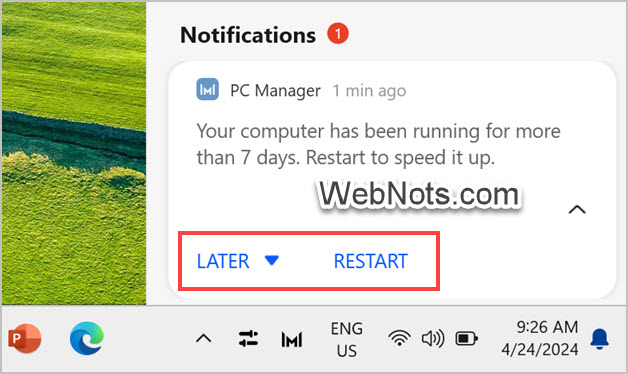
But in most cases, you need to manually monitor the system running time as explained below and shutdown manually when needed.
1. Finding System Up Time from Task Manager
To find system’s up time in Windows, you need to open Task Manager app. There are multiple ways to open this app.
- Use “Control + Shift + Esc” shortcuts keys or right-click on the taskbar and select Task Manager option. Alternatively, press “Alt + Control + Delete” keys and then choose Task Manger from the list of available options. Another easy option is to use Windows Search to search and find the app.

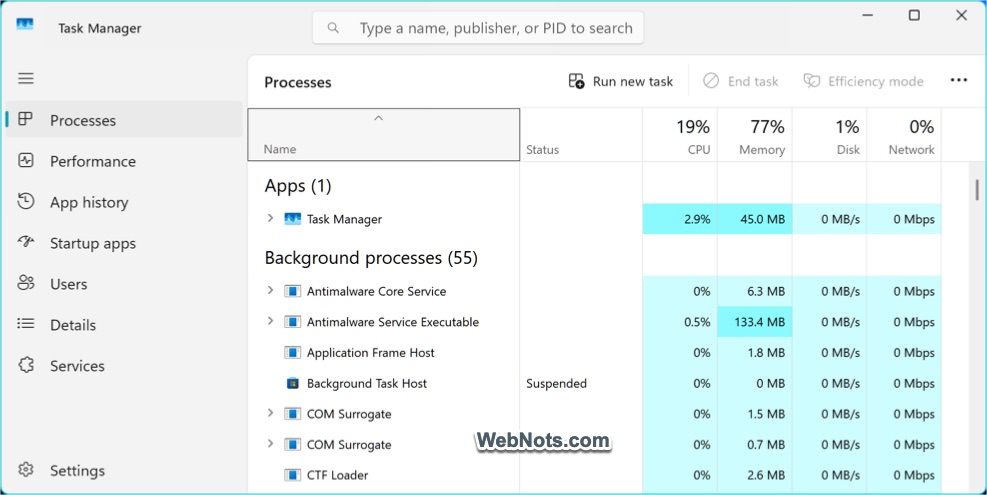
- The Task Manager app will open with “Processes” tab and show all the processes running on your system.
- Go to the “Performance” tab and then select “CPU” section. It will show various CPU parameters and find the time showing against the “Up time” option.
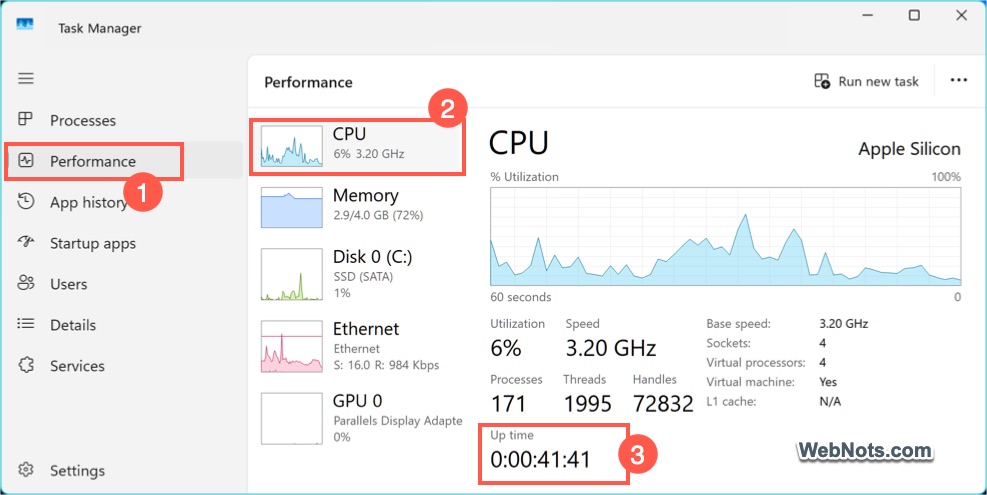
Windows shows the up time in “Days : Hours : Minutes : Seconds” format. As you can see in the above screenshot, the system is running for the past 41 minutes and 41 seconds.
2. Using Command Prompt
Next option is to use the Command Prompt, however, it will show the actual boot time and not the running time of your system.
- Search and open Command Prompt app.
- Type the following command in the prompt and press enter.
systeminfo | find "System Boot Time"- This command will take few seconds to scan through all your system information details and display the exact date and time the system was last booted. So, you need to manually calculate the difference between the current time and the boot time to get the uptime.

3. Using “net statistics” Command
This method also works on Command Prompt with a different network command.
- Open Command Prompt, type the following command and press enter.
net statistics workstation- In the output, look for the first line that starts with “Statistics since…”.
- The date and time listed is when your workstation service started (usually at last boot).

4. Using Windows PowerShell
This methods works like Task Manager showing the duration of system running time.
- Search and open Windows PowerShell app.
- Type the following command and press enter.
(get-date) – (gcim Win32_OperatingSystem).LastBootUpTime- This command returns a precise duration (days, hours, minutes, etc.) since the system was last booted.

Final Words
There are also third-party apps like HWMonitor and Speccy for monitoring system performance parameters including uptime. These tools can provide more visual representations of uptime and even send alerts if a system goes down. However, in-built Windows tools are sufficient in most cases. Note that sleep and hibernation durations are included in the system uptime as they do not trigger shut down or restart.


