
You see it every week. A contract sits in review. A purchase order is lost in someone’s “to sign and return” pile. And the vendor has been emailing the agreement back and forth, trying to get everything in order for the past two weeks. Nobody’s struggling with document writing anymore. The real pain is slow document turnaround. The good news: you don’t need to overhaul everything to fix your documents. Most of the gains come from removing ambiguity in a few specific places.
What “Document Turnaround Time” Actually Covers?
Turnaround refers to the total document lifecycle period.
- It covers everything from the moment you request a document to when it is ready for use or becomes legally binding.
- This includes initial drafting, editing, review, approval, signatures, and execution.
Does any part sound scary? Don’t be.
Most people view the time spent drafting an agreement as the hard part. It usually isn’t. While the actual contract drafting can take a few hours in total (no one writes it from a blank page, really), it’s the review and signing that eat up most of the document cycle. Weeks, if not months. Letting this time slip away in emails is not only annoying but also has serious economic, regulatory, and labor consequences. As a study by McKinsey shows, employees spend almost a fifth of their working hours (a full working day a week!) searching for information or tracking it down.

In a paper-intensive world, this lost time is too often spent on administrative trivia and email exchanges. So, if you want faster document cycles, the trick is to cut down on idle time between steps instead of trying to make the steps themselves faster.
Where Document Work Gets Stuck?
Let’s break down the most common bottlenecks.
Incomplete Data Brings Documents to a Standstill
The first major structural failure in any document almost always occurs before its first word is written. People start with half-baked information. For example, you negotiate contracts without a clear scope or without identifying the right stakeholders. The back-and-forth emails to clarify unknown details distract everyone involved, so a huge amount of time is wasted and the document usually requires significant rework.
Nobody Knows Who Owns What
A lack of clear decision-making leads to inertia. Everyone waits for others to act because they are not sure what is expected of them or who should approve or decide on the document. Instead of moving forward in parallel, teams review documentation in sequence. In parallel reviews, people work on the document simultaneously and resolve blockers quickly. In sequential reviews, often caused by ambiguous decision rights, everyone is wary of making even obvious comments. They don’t want to block someone else from acting or rework something that will be changed later anyway.
Harvard Business Review points out unclear decision rights as a source of friction, or “organizational drag.” When no one is responsible for anything, nothing happens.
Calendar-Dependent Reviews
Subject-matter experts often review content in meetings rather than setting aside time to review documents independently. While the review itself may take only about 20 minutes, waiting for a slot in their calendar can take days or even weeks, depending on availability. Multiply this by the number of review cycles, and the delay adds up quickly.
Signature Logistics
We can agree on almost anything digitally except one thing: physically signing a document is still unnecessarily painful. Printing, signing, scanning, and sending documents back is a waste of time and slows down deal closure. Organizations that use e-signatures typically cut agreement completion time by 50% or more. That makes signature logistics one of the most preventable delays in the entire process.

How to Cut Turnaround Time: 3 Easy Steps?
You don’t need to overhaul everything at once. Start with these three straightforward fixes.
1. Define Who Does What
For each document type you handle regularly, map the steps and assign a clear owner to each one. The better everyone understands the sequence of steps and the people involved, the less time documents will spend in limbo while someone tries to figure out how to handle them.
2. Standardize What Goes In and What Comes Out
Consistency is key to an efficient operation. A properly prepared intake form will eliminate a large amount of communication and questions that delay the start of a project. Getting the scope, parties, timeline, and any restrictions or special requests upfront will reduce back-and-forth during the process and lower the need for revisions.
Consistency leads to fewer revisions, and document templates are the key to consistency.
3. Match the Tool to the Actual Problem
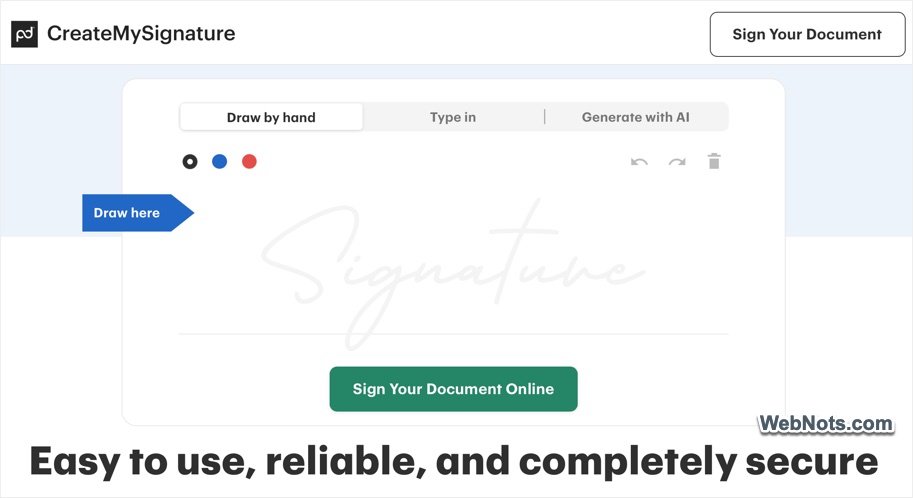
Smaller teams with simple workflows may only need a shared document without complicated reviews. A lightweight e-signature tool can help them to process it quickly. For instance, tools like CreateMySignature provide ready-made templates with the option to sign documents online making it as a go-to solution.
Larger organizations with compliance requirements, by contrast, might need automated routing and audit trails. Therefore, they choose full-featured document automation platforms that close these document gaps. Either way, figure out where your time is actually going and fix that stage first. Avoid buying a complex platform that doesn’t address your real constraint.
Where You’ll Feel It
- Most sales teams agree that the quicker they can close a sale, the better. No one wants a contract sitting in review for weeks, delaying revenue and increasing the risk of the deal falling apart.
- HR teams benefit when offer letters and policy acknowledgments are completed before someone’s first day. Delayed paperwork makes onboarding worse for everyone and creates compliance exposure.
- Procurement and finance teams avoid end-of-month bottlenecks when escalation rules are clear and documents don’t pile up waiting for approvals that were never assigned.
- Cross-functional teams spend less time in status meetings when document ownership is visible. If everyone can see where something is in the process, nobody needs to send the “Any update on this?” email.
Measure It
Choose one document type and calculate the average time it takes to move from request to signature. Then break it down by stage to identify bottlenecks. In most cases, only one or two stages dominate the timeline. Many suggest tracking the number of revision rounds. Fewer rounds generally indicate that your intake process and templates are working as intended.
Tracking time can become overly complicated, but the real goal is simple: identify where time is being wasted.

Summing Up
Why do the first documents always take so long to circulate within the team? It’s rarely because the author is working slowly. Usually, the document is sitting in limbo due to some form of process inefficiency.
Ask yourself: Who is responsible for moving the document to the next stage of the workflow? Is review being done in real time or as a batch process? Are documents still being printed for physical signatures?
Fix the intake, assign clear owners, allow reviews to happen asynchronously, and use e-signatures. Pick one document type, find the biggest bottleneck, and fix that first.


