Artificial intelligence has moved beyond answering questions, generating text, and creating images. A new generation of AI technology is emerging that can plan tasks, use software, access information, and take actions with limited human intervention. These systems are known as AI agents. Unlike traditional AI chatbots, which primarily respond to user instructions, AI agents can work toward a specific goal by deciding what steps are necessary, using available tools, and evaluating the results. For example, instead of simply suggesting how to organize your schedule, an AI agent could review your calendar, identify available time slots, arrange tasks, and prepare a proposed schedule.
AI agents are becoming an important part of the next stage of artificial intelligence. They have the potential to change how people work with computers, manage everyday activities, conduct research, and automate business processes. But what exactly are AI agents? How do they work, and what can they actually do for you? Let’s explore this emerging technology.
What Are AI Agents?
You can define an AI agent something like:
An AI agent is a software system that uses artificial intelligence to understand a goal, make decisions, and perform actions to achieve that goal.
It combines an AI model with additional capabilities such as planning, memory, external data access, and connections to other applications. These capabilities allow it to perform multiple steps without requiring the user to provide instructions for every individual action. For example, imagine asking an AI agent to research the best laptops for students under $800. A traditional chatbot might provide a general list based on its existing knowledge. An AI agent could take the task further by:
- Searching online stores for available laptops.
- Collecting their specifications and prices.
- Comparing processors, memory, storage, and battery life.
- Checking customer reviews and product ratings.
- Organizing the findings into a comparison table.
- Recommending suitable options based on your requirements.
The important difference is that the agent does not simply generate an answer. It can carry out a sequence of actions to complete the assigned task. AI agents can also connect to other agents or software systems to handle more complicated workflows. Depending on their configuration, they may operate independently for certain tasks or request human approval before performing important actions.

How Do AI Agents Work?
AI agents generally follow a continuous cycle of observing information, reasoning about what to do, taking action, and evaluating the results. Although the technical implementation varies case by case, most modern AI agents rely on several interconnected components.
1. Understanding the Goal
The process begins when a user provides an objective. Instead of giving detailed instructions for every step, the user describes the desired result. The AI agent interprets the request and identifies what needs to be accomplished. For example, you might ask, “Find five useful project management applications for a small business and compare their free plans”. The agent understands that it needs to research applications, identify their pricing plans, examine available features, and prepare a comparison.
2. Planning the Tasks
After understanding the goal, the agent breaks the request into smaller tasks. It determines the order in which these tasks should be completed and identifies the information or tools required for each step. For the project management example, the plan might include:
- Identify popular project management applications.
- Visit their official websites.
- Find information about free plans.
- Compare features and limitations.
- Prepare a summary of the findings.
The agent can also modify its plan when it encounters missing information or unexpected results.
3. Gathering Information
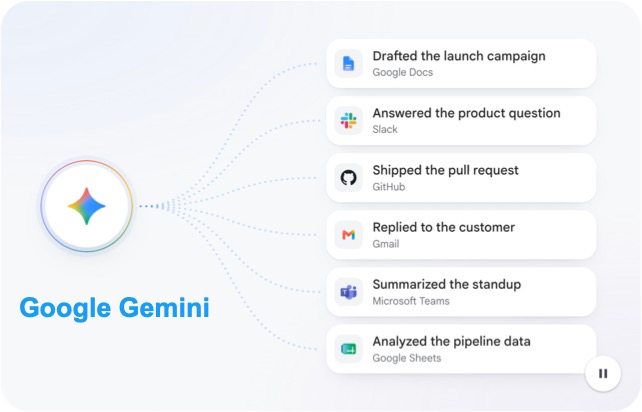
AI agents can collect information from different sources, depending on their permissions and available integrations. These sources may include websites, documents, databases, email accounts, calendars, and business applications. For example, an agent helping you prepare a meeting may retrieve information from your calendar, review related documents, and collect relevant email conversations.
4. Taking Action
This is one of the most important differences between an AI agent and a conventional chatbot. An agent can use connected tools to perform actions rather than simply explain how to perform them. Depending on its permissions, it might:
- Create or edit documents.
- Search websites.
- Organize files.
- Update spreadsheets.
- Schedule calendar events.
- Send or prepare emails.
- Retrieve information from databases.
- Execute approved software operations.
The actions available depend on the tools, integrations, and permissions provided to the agent.
5. Evaluating the Results
After completing an action, the agent examines the result to determine whether it has achieved the intended outcome. If something is missing or an action fails, it may try another approach, gather additional information, or ask the user for clarification. For example, if an agent cannot find the pricing information for an application, it might search the official help documentation or look for another reliable source.
This feedback process allows the agent to adjust its approach rather than blindly following a fixed sequence of instructions.
Key Components of an AI Agent
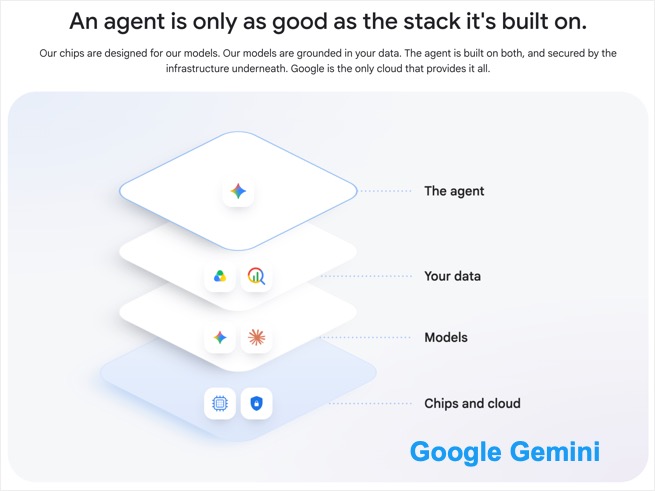
An AI agent combines several technologies to understand instructions and perform tasks. The main components include the following.
| Component | What It Does |
|---|---|
| AI Model | Understands instructions, interprets information, and supports decision making. |
| Planning | Breaks complex objectives into smaller tasks and determines their sequence. |
| Memory | Maintains relevant information and context during or across tasks. |
| Tools and Integrations | Connects the agent to websites, applications, APIs, and databases. |
| Feedback | Evaluates results and helps the agent adjust its next actions. |
| Guardrails | Restricts actions and establishes safety rules and permissions. |
AI Agents vs AI Chatbots: What is the Difference?
AI agents and AI chatbots are related technologies, but they serve different purposes.
- A traditional chatbot primarily responds to questions and instructions.
- An AI agent can go beyond conversation by planning and executing multiple actions to accomplish a goal.
For example, you ask a chatbot to help organize a business trip. It might suggest destinations, hotels, transportation options, and a possible itinerary. An AI agent with suitable integrations could search for flights, compare hotels, review your calendar, prepare an itinerary, and potentially make bookings after receiving the required approvals. Here is a comparison of their main capabilities.
| Feature | Traditional AI Chatbot | AI Agent |
|---|---|---|
| Answer questions | Yes | Yes |
| Generate content | Yes | Yes |
| Plan multiple tasks | Limited | Yes |
| Use external tools | Sometimes | Commonly |
| Interact with applications | Limited | Yes, with integrations |
| Perform actions | Usually limited | Yes, with permissions |
| Adapt to unexpected results | Limited | Can adjust its approach |
| Complete multi-step workflows | Usually requires guidance | Can handle them independently |
It is important to understand that not every product marketed as an AI agent has the same capabilities. Some agents perform simple predefined operations, while more advanced systems can manage complex tasks involving multiple applications.
What Can AI Agents Do for You?
AI agents have applications across personal productivity, business operations, research, software development, and many other areas. Here are some practical examples.
- Manage Your Daily Tasks: A personal AI agent can help organize your daily activities by reviewing your schedule, identifying priorities, and preparing a task list.
- Research Information Online: Research agents can search multiple websites, collect information, compare sources, and prepare structured reports. This can be useful for students, researchers, content creators, and business professionals.
- Manage Emails and Communication: An AI agent connected to an email application can help organize messages, identify important conversations, summarize long email threads, and draft replies.
- Automate Business Operations: Businesses can use AI agents to automate repetitive administrative work. For example, a customer support agent might receive a customer question, identify the nature of the problem, search the company’s knowledge base, and suggest a solution or escalate complicated cases to a human representative.
- Help With Software Development: AI coding agents can assist developers with more than generating individual code snippets.
- Organize Files and Documents: An AI agent with access to your computer or cloud storage can help organize digital files.
- Support Online Shopping: Shopping agents can help users find products that match particular requirements.
- Assist With Learning: AI learning agents can help students organize study schedules, find educational resources, explain difficult concepts, and prepare practice questions.
Types of AI Agents
AI agents can be classified according to their capabilities, architecture, and level of autonomy. The following are some common types.
| Type of AI Agent | Description | Simple Example |
|---|---|---|
| Simple Reflex Agents | Respond to specific conditions using predefined rules. | An email agent moves messages containing certain keywords into a spam folder. |
| Goal-Based Agents | Select actions that help achieve a specific objective. | A navigation agent finds the best route to a destination. |
| Utility-Based Agents | Compare possible outcomes and choose the option with the greatest overall benefit. | A travel agent compares routes based on cost, time, and convenience. |
| Learning Agents | Use feedback and experience to improve their performance. | A recommendation agent improves suggestions based on previous interactions. |
| Multi-Agent Systems | Use multiple specialized agents that work together to complete a larger task. | Research, analysis, fact-checking, and writing agents collaborate to prepare a report. |
Real-World Examples of AI Agents
Here are some of the popular examples:
| Company | AI Agent / Product | What It Can Do |
|---|---|---|
| OpenAI | ChatGPT Agent | Research websites, interact with web pages, analyze information, and complete multi-step tasks. |
| Microsoft | Microsoft Copilot Agents | Automate business tasks, retrieve company information, and assist with workflows in Microsoft applications. |
| Gemini Enterprise Agents | Help businesses research information, interact with enterprise data, and automate work processes. | |
| Anthropic | Claude Code | Work with software projects, edit code, run commands, and help developers fix problems. |
| Perplexity | Comet | AI-powered browsing and assistance for researching information and carrying out browser-based tasks. |
| Salesforce | Agentforce | Automate customer service, sales support, and CRM related business operations. |
| Amazon | Amazon Bedrock AgentCore | Provides infrastructure for developers to build and operate AI agents that use tools and business systems. |
| Cognition | Devin | An AI software engineering agent that can plan coding tasks, write code, debug, and work on software projects. |
| ServiceNow | ServiceNow AI Agents | Automate IT support, employee services, and business workflows. |
| Zapier | Zapier Agents | Connect applications and automate tasks across different online services. |
| IBM | watsonx Orchestrate | Coordinate AI agents and automate enterprise business processes. |
| UiPath | UiPath AI Agents | Combine AI agents with robotic process automation to automate business operations. |

Not all the products above are ready to use AI agents. Some are platforms that allow businesses and developers to build their own agents.
| Category | Examples |
|---|---|
| Ready to use AI agents | ChatGPT Agent, Devin, Comet |
| Business AI agents | Salesforce Agentforce, ServiceNow AI Agents |
| AI agent development platforms | Microsoft Copilot Studio, Amazon Bedrock AgentCore, OpenAI Agents SDK |
| Workflow automation agents | Zapier Agents, UiPath AI Agents |
What Are the Advantages of AI Agents?
AI agents offer several potential advantages over traditional software automation and basic AI assistants.
- Reduced manual work: Agents can handle repetitive tasks and multi-step workflows, reducing the need for constant user involvement.
- Improved productivity: They can collect information, organize data, and perform routine operations more quickly.
- Task automation: Agents can connect different applications and coordinate actions across multiple systems.
- Flexible problem solving: More advanced agents can modify their plans when they encounter unexpected information or errors.
- Continuous availability: Agents configured to run in the background can monitor systems or perform scheduled tasks without requiring someone to start each operation manually.
- Scalability: Businesses can deploy multiple agents to support different workflows and handle larger volumes of routine work.
Limitations and Risks of AI Agents
Despite their potential, AI agents are not completely reliable. Giving an AI system the ability to take action introduces risks that are not present in ordinary question and answer interactions.
- Incorrect Decisions: AI agents can misunderstand instructions, misinterpret information, or generate inaccurate results. If an agent acts on incorrect information, it may perform the wrong operation or produce an unreliable outcome.
- Privacy and Data Security: Agents may require access to personal files, email accounts, business documents, or other sensitive information. If these permissions are not properly controlled, private data could be exposed or misused.
- Unintended Actions: An agent with excessive permissions might delete files, modify records, send incorrect emails, or make changes that are difficult to reverse.
- Prompt Injection Attacks: AI agents that read external websites, emails, or documents may encounter malicious instructions hidden in that content. These instructions could attempt to manipulate the agent into revealing information or performing unauthorized operations.
- Cost and Resource Consumption: Complex agent workflows may require multiple AI model calls, external services, and additional computing resources.
- Lack of Human Judgment: AI agents can analyze information and make recommendations, but they do not possess human judgment or a complete understanding of every situation. Financial decisions, legal matters, medical decisions, and other high impact activities require appropriate human expertise and oversight.
Using AI Agents Safely
If you plan to use AI agents for personal or professional activities, it is important to understand what permissions they require. Consider the following precautions:
- Start with simple tasks that do not involve sensitive information.
- Give agents access only to the files and applications they actually need.
- Require approval before sending emails, making payments, or deleting files.
- Review important actions performed by the agent.
- Avoid sharing passwords and other sensitive credentials unnecessarily.
- Check the privacy and data-retention policies of the service.
- Keep records of important automated actions.
- Use additional security controls when connecting agents to business systems.
The principle of least privilege is particularly important. An agent should receive only the permissions necessary to complete its assigned task.
The Future of AI Agents
AI agents could fundamentally change how people interact with computers. Today, users generally open applications, navigate menus, enter information, and complete individual operations themselves. In the future, more people may simply describe the outcome they want and allow AI agents to coordinate the necessary applications and processes. For example, instead of opening several applications to organize a business project, you might ask an agent to review the project requirements, prepare a task list, create a schedule, and organize the necessary documents.
Another important development is the growth of multi-agent systems. Rather than relying on one general purpose agent, future applications may use several specialized agents working together. AI agents are also likely to become more closely integrated with operating systems, web browsers, office applications, and mobile devices.