
Although Chinese companies entered late in the AI race, their AI models have begun to lead their Western counterparts in recent years. Companies including Alibaba, Baidu, Moonshot AI, Tencent, ByteDance, DeepSeek, MiniMax, and Zhipu AI now develop language models that compete across coding, reasoning, multilingual understanding, document analysis, and multimodal AI. If you are stuck with ChatGPT, Claude, or Gemini, take a break and consider these 10 Chinese AI models.





Using Chinese AI Models
Many of these models are available through web chat, APIs, or open-weight releases, giving developers and businesses more choices than ever before. While some platforms need Chinese phone number or WeChat to login (with code verification), you can still use other social login or email options as an alternative.
1. Kimi K3 (Moonshot AI)
Kimi K3 is Moonshot AI’s latest flagship model and one of the largest open-weight AI models released publicly with over 2.8 trillion parameters. It supports creation of websites, slides, documents, and sheets through multimodal understanding. However, Moonshot positions it as a frontier model for developers and enterprise users with access available through the Kimi chatbot, API, desktop apps, and browser extension.
2. Qwen (Alibaba)
Alibaba’s Qwen family has become one of the most widely adopted open-weight AI model series. You can use the AI Assistant for free through their Qwen Studio, which exactly looks like ChatGPT interface with projects, code agent, and chat box features. Developers can also access commercial versions through Alibaba Cloud Model Studio. Their complete ecosystem includes models for chat, coding, reasoning, vision, audio, and AI agents.
3. DeepSeek
DeepSeek attracted worldwide attention for producing highly capable reasoning models at significantly lower operating costs than many proprietary competitors. Unlike other models, DeepSeek is a text-based chatbot that does not provide image or video generation capabilities. Similar to Kimi, DeepSeek models are also popular for code-based tasks like mathematics, programming, and logical reasoning. You can explore DeepSeek’s complete capabilities in our earlier article before trying it.
4. GLM (Zhipu AI)
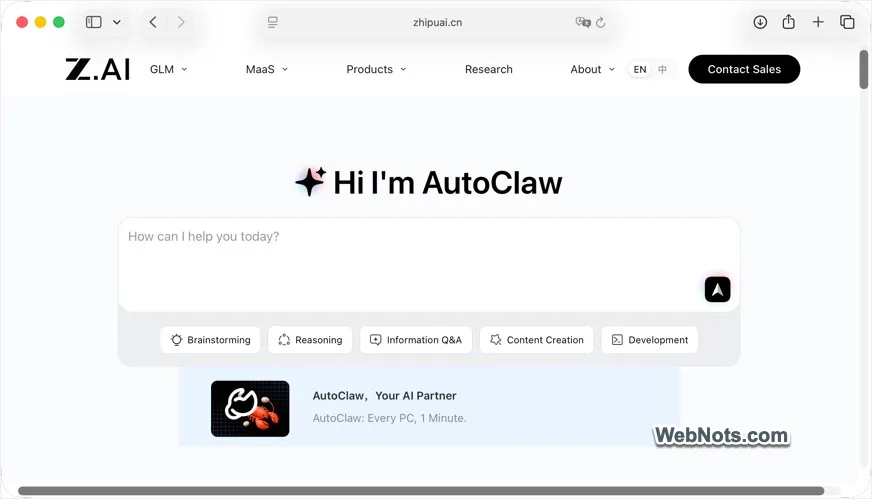
Zhipu AI’s GLM series (General Language Model Pretraining with Autoregressive Blank Infilling) focuses on coding, reasoning, and autonomous AI agents. The company has become one of China’s leading foundation model developers, offering both cloud APIs and open-weight models for developers. You have multiple tools like AutoClaw, ChatGLM, AutoGLM for various purposes.
5. Hunyuan (Tencent)
The Hunyuan (Hy) model family powers AI services across Tencent’s products. The platform includes language models, image generation, coding assistance, and AI agent capabilities, with APIs available for developers. The Hy AI Studio interface is similar to ChatGPT and Gemini with options to select the model and capability (like High, Low, or No Think).
6. ERNIE or Wenxin (Baidu)
ERNIE is Baidu’s flagship AI model family and powers the ERNIE Bot (also known as Wenxin Yiyan). Baidu has integrated ERNIE into its search engine, cloud services, office tools, and developer platform, making it one of China’s largest AI ecosystems. Note that the platform is primarily available in Chinese.
7. MiniMax
MiniMax develops large language and multimodal AI models for text, speech, image, and video generation. Its APIs are designed for businesses building AI-powered applications and conversational products. You have different tools for coding (MiniMax Code), video generation (Video Hailou), and music creation (Audio).
8. StepFun
StepFun is one of China’s fast-growing AI startups developing foundation models for reasoning, coding, and multimodal AI. The company offers cloud-based AI services aimed at developers and enterprises. It also provides a separate voice conversation model called StepAudio.
9. Doubao (ByteDance)
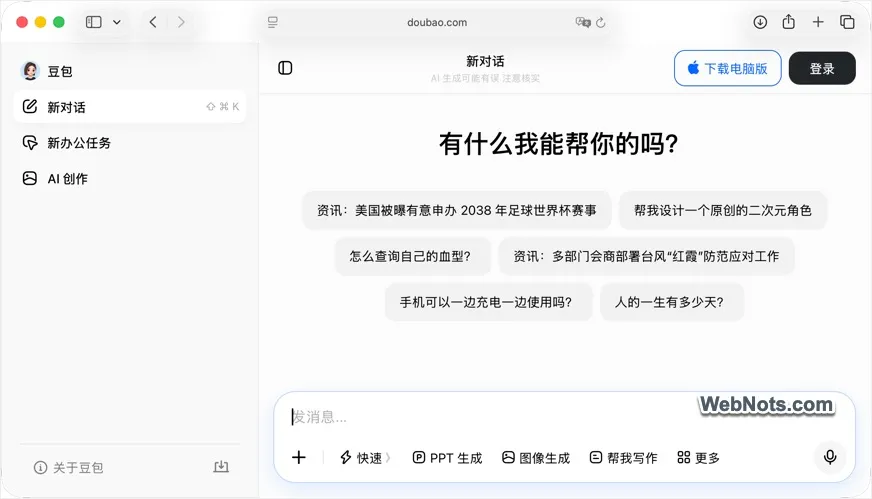
Doubao is ByteDance’s consumer AI assistant, supporting tasks like writing, translation, coding, image understanding, document summarization, and conversational AI. Thanks to ByteDance’s large ecosystem, Doubao has rapidly become one of China’s most widely used AI assistants. However, most features are in Chinese and the chatbot may not be available in some countries. So, this will be primarily useful if you have a team in China to get things done.
10. Spark (iFlytek)
iFlytek Spark combines large language models with the company’s long-standing expertise in speech recognition, education technology, and voice assistants. Spark is particularly strong in Chinese language processing and educational applications. Its AstronClaw model allows you to create your own agents or teams and schedule tasks.
Final Words
Here is a summary of the top 10 Chinese AI models:
| Need | Recommended Model |
|---|---|
| Coding | Kimi K3, Qwen, DeepSeek, GLM |
| General AI Assistant | Doubao, Kimi, Qwen |
| Enterprise Applications | Qwen, Hunyuan, ERNIE |
| Speech & Voice | Spark |
| Search & Knowledge | ERNIE |
| Multimodal AI | MiniMax, Kimi |
| Open-weight Models | Kimi, Qwen, DeepSeek, GLM |
You have an AI model for almost any use case, from coding and content generation to enterprise applications. However, language remains the biggest constraint when using them to the full extent. Since their primary user-base is still in China, the apps and web interfaces typically offer English only as a secondary language. This can be a limitation especially if you intend to use their premium services that require proper support.


