In today’s globalized world, text is one of the most fundamental ways humans communicate. Whether it’s written in English, Chinese, or any other language, computers need to understand, store, and manipulate this text seamlessly. This is where Unicode comes in to handle characters, alphabets, and symbols across the digital realm. In this complete guide, we’ll explore what Unicode is, how it works, and why it’s essential in today’s interconnected world.
1. What is Unicode?
Unicode is a character encoding standard that aims to provide a unique number (or “code point”) for every character, no matter the platform, program, or language. Simply put, Unicode allows computers to represent and manipulate text in virtually any language, including symbols, emojis, and special characters, in a consistent manner.
Before Unicode, different character encodings existed (e.g., ASCII, ISO-8859-1) to represent text in different languages, but these systems were limited. For instance, ASCII could only handle English characters, while other encodings would have their own limited character sets. This led to compatibility issues when trying to exchange information across different systems.
Unicode solves this problem by providing a universal standard that encompasses nearly all written scripts, mathematical symbols, and even emojis. It ensures that characters are represented consistently across different platforms, devices, and applications.
1.1. A Brief History of Unicode
Unicode was first introduced in 1987 by the Unicode Consortium, a non-profit organization focused on developing a universal character encoding system. The primary goal was to overcome the limitations of previous encoding standards, which were not able to support the variety of characters needed for multilingual communication.
- 1991: Unicode version 1.0 is officially released, supporting 7,161 characters.
- 2000: The Unicode Standard 3.0 added support for a wide range of languages, including more scripts from Asia and Africa.
- 2009: Unicode introduced support for emojis in version 5.2.
- 2019: Unicode 12.0 added 5,000 new characters, including many emojis.
- 2024: There are totally 154,998 supported characters as per Unicode 16.0.
1.2. The Unicode System of Code Points
In the Unicode system, each character is assigned a code point, which is a unique number in hexadecimal format. These code points are typically written in the form of “U+XXXX”, where “XXXX” represents a sequence of hexadecimal digits. For example:
- The code point for the capital letter A is U+0041.
- The code point for the Euro sign (€) is U+20AC.
- The code point for the Smiling Face with Open Mouth emoji is U+1F603.
1.3. UTF Character Encodings
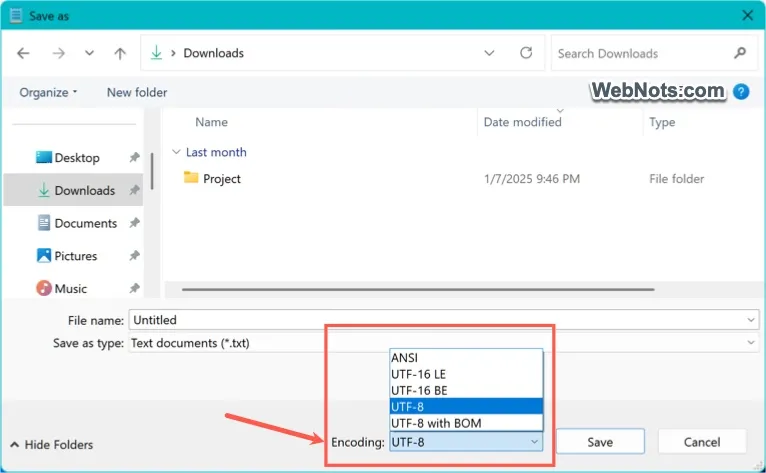
While Unicode assigns a unique code point to each character, the way those characters are stored in memory or transmitted over the internet requires encoding schemes. There are several common Unicode encodings:
1.3.1. UTF-8 (Universal Transformation Format – 8 bits)
UTF-8 is the most widely used encoding on the web. It is variable-length, meaning it uses different numbers of bytes for different characters. ASCII characters (U+0000 to U+007F) take just one byte, while characters outside this range take more bytes. UTF-8 is backward-compatible with ASCII, which means any ASCII text is also valid UTF-8.
1.3.2. UTF-16 (Universal Transformation Format – 16 bits)
UTF-16 is also a variable-length encoding. It uses 2 bytes for characters in the Basic Multilingual Plane (BMP), which includes most common characters, and 4 bytes for other characters. UTF-16 is commonly used in programming languages and operating systems like Windows.
1.3.3. UTF-32 (Universal Transformation Format – 32 bits)
UTF-32 is a fixed-length encoding, meaning each character is represented by 4 bytes, regardless of the character. While UTF-32 is simple and efficient for software processing, it uses more memory compared to UTF-8 or UTF-16.
2. Why is Unicode Important?
Unicode has become fundamental in the digital world for several reasons:
2.1. Global Compatibility
Unicode allows text to be displayed consistently across different platforms, languages, and devices. Whether you’re reading a website in Chinese or sending a message with an emoji, Unicode ensures the correct characters appear.
2.2. Support for Multiple Languages
Unicode supports characters from virtually all writing systems, including Latin, Arabic, Chinese, Cyrillic, and many others, as well as mathematical symbols, emojis, and ancient scripts. This has made it possible to create software, websites, and documents that can be used internationally without worrying about encoding mismatches.
2.3. Ease of Text Processing
Unicode simplifies text processing in programming, as developers don’t need to worry about managing different encodings for different languages. This consistency streamlines tasks like searching, sorting, and text analysis across global applications.
2.4. Interoperability
Thanks to Unicode, information can be exchanged between different systems and applications seamlessly. It’s especially important for software systems that handle multilingual content, such as databases, word processors, and web browsers.
3. Typing Unicode Symbols
Typing Unicode symbols can be done through several methods depending on your operating system:
3.1. Windows
- Use Alt codes (e.g., hold the Alt key and type the numeric code on the keypad, such as Alt + 0128 for the Euro symbol).
- Use the Character Map tool to find and copy symbols.
3.2. macOS
- Use Option key with Unicode Hex Input method.
- Press “Control + Command + Space” to open the Character Viewer and search for the desired symbol.
3.3. Linux
- Use “Control + Shift + U”, followed by the Unicode code point (e.g., “Control + Shift + U + 20AC” for the Euro sign).
3.4. HTML
- Use HTML entities (e.g., € for the Euro symbol) to insert Unicode characters into web pages.
3.5. Mobile Devices
- On smartphones and tablets, most Unicode symbols are accessible through the emoji keyboard or by copying from online sources.

Each method makes it easy to input Unicode symbols regardless of your platform, ensuring smooth communication across languages, scripts, and cultures.
4. Unicode in Action: Emojis and Beyond
While Unicode is essential for representing languages, it has also paved the way for a rich diversity of symbols. One of the most popular and widely recognized aspects of Unicode today is its support for emojis.
Emojis are characters that represent facial expressions, objects, animals, and other items used in digital communication. Unicode added emojis to its character set in the early 2000s, and today, Unicode includes thousands of emojis. Each emoji has a unique Unicode code point, which ensures that it can be used consistently across all devices and platforms.
For example:
- The heart emoji ❤️ has the code point U+2764.
- The thumbs up emoji 👍 has the code point U+1F44D.
Emojis are widely used in texting, social media, and other online platforms, enhancing communication and expressing emotions in a way that transcends language.
5. How New Symbols are Added to Unicode?
Unicode is a living standard, meaning it is continually updated to accommodate new characters, scripts, and symbols that emerge as languages, cultures, and technologies evolve. The process of adding new symbols to Unicode is managed by the Unicode Consortium, which works with various stakeholders to ensure a broad representation of global languages and symbols. Here’s a look at how new symbols, including emojis and lesser-known scripts, are added to Unicode.
5.1. Proposal Submission
To introduce a new symbol into Unicode, an official proposal must be submitted. The proposal typically comes from individuals, organizations, or communities that identify the need for a new character. This could be due to a new language or script gaining recognition, a cultural symbol that has become widely used, or a newly created emoji or graphical symbol.
For example, proposals for new emojis often come from large tech companies like Apple, Google, or social media platforms, as they observe the growing use of specific symbols in digital communication.
5.2. Review Process
Once a proposal is submitted, it undergoes a thorough review process. The Unicode Technical Committee (UTC) evaluates the proposed character based on a set of guidelines and priorities. This committee includes experts in various fields such as linguistics, computer science, and cultural studies.
5.3. Incorporation into Unicode
Once a proposal is accepted, the new symbol is added to the Unicode Standard in the next Unicode release. Each version of Unicode is numbered (e.g., Unicode 15.0, Unicode 16.0) and typically includes thousands of new characters, scripts, and symbols. The addition of a new symbol comes with a unique code point, just like all other characters in the Unicode Standard.
For example, the “Face with Medical Mask” emoji (😷) was added in Unicode 12.0, as a result of the global COVID-19 pandemic. It was proposed due to the surge in usage of the mask symbol as a representation of health awareness.
5.4. Font and Software Support
Once new symbols are part of the Unicode Standard, the next challenge is ensuring that the symbols are properly supported by fonts and software. This requires font creators and operating system developers to update their systems to render the new characters correctly. This can involve designing new fonts, adding the character to existing ones, and testing its functionality across platforms.
For emojis, software vendors (like Apple, Google, Microsoft, and Samsung) create their own visual representations of the symbols. These representations, known as emoji designs, can vary across platforms, which is why an emoji may look slightly different on an iPhone compared to a Samsung device. However, the underlying Unicode code point ensures that the symbol itself remains consistent.
5.5. Public Adoption and Usage
Finally, for a new symbol to be fully integrated into digital culture, it must gain widespread adoption. This typically happens over time, as people begin to use the symbol in social media, messaging apps, websites, and other digital platforms. As users adopt the new symbols, they gradually become a part of everyday digital communication, further solidifying their place in the Unicode Standard.
6. How Unicode Affects Developers?
For developers, Unicode is a foundational concept when working with text in software development. Here’s how it impacts different areas of development:
6.1. Web Development
Web developers must ensure that their websites are Unicode-compatible, particularly when handling user input and displaying international content. UTF-8 is the most common encoding for web pages, and it is essential to declare it in the HTML document’s <meta> tag to ensure proper rendering:
<meta charset="UTF-8">6.2. Programming Languages
Most modern programming languages, including Python, Java, JavaScript, and C#, support Unicode natively. Handling strings and text in these languages is simplified through libraries and functions that manage encoding and decoding.
6.3. Databases
When working with databases, it’s important to choose a Unicode-compatible character set (e.g., UTF-8) to store and retrieve text. This ensures that characters from different languages can be stored without corruption, making databases more versatile for global applications.
7. Challenges with Unicode
Despite its many advantages, Unicode isn’t without challenges. Some of the common issues include:
- Complexity: The Unicode standard can be complex, especially for older systems that do not fully support it.
- Performance: Some encoding schemes, like UTF-32, require more memory than others, which can affect performance in resource-constrained environments.
- Character Rendering: Although Unicode provides a consistent character representation, it’s still up to the software (like web browsers or operating systems) to render these characters. If the software does not support a particular character or emoji, it may appear as a blank box or an unknown symbol.
8. Conclusion
Unicode has transformed the way we use and share text in the digital world. It has enabled communication across languages, facilitated the rise of emojis, and provided a universal way of encoding characters for all kinds of applications. As the world continues to grow more interconnected, Unicode remains an important technology in ensuring that people can communicate effectively, no matter where they are or what language they speak.