The Network and Sharing Centre is one of the most useful system settings in Windows 10. It allows users to view network connections, modify settings and manage access to various network resources. In this article we will explore how to access and use the Network and Sharing Center to enhance your productivity.
How to Access the Network & Sharing Center in Windows 10
There are multiple ways you can access Network and Sharing Center in Windows 10.
- Open the Windows Settings app by pressing “Win + I” keys on your keyboard. And navigate to “Network and Internet” settings.

- Scroll down the status and click the “Network and Sharing Center” link. It will open on a new window.
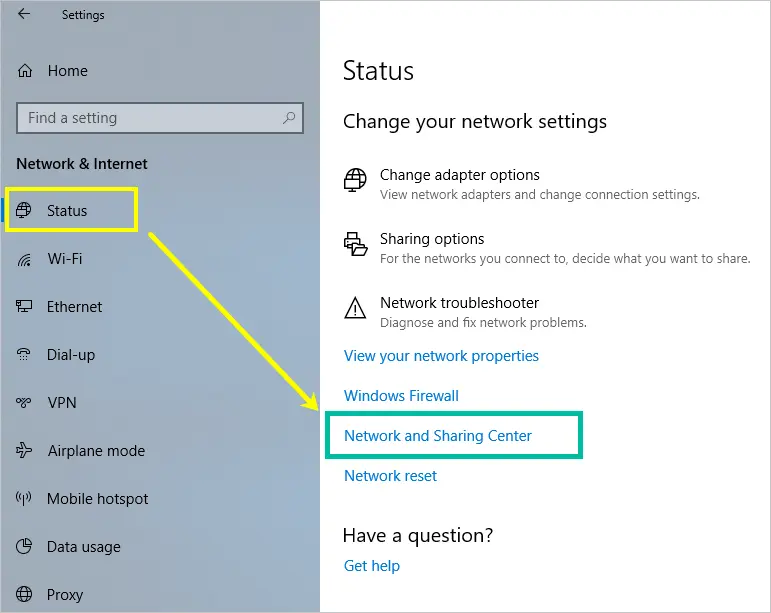
Alternatively, you can type, “network sharing” in Windows search box and open Network and Sharing Center. Otherwise you can open “Control Panel\Network and Internet\Network and Sharing Center” in File Explorer to open the settings in Control Panel.
Details on Network and Sharing Center
The first thing you see on the Network and Sharing window is a list of your active network(s) connection status, as well as access and network type.

You can view many options to change the network settings below your active connection and on the left sidebar.
Customize Private and Public Network Profiles
Under the name of the active network, you can see the type of the network as “Private” or “Public”. For example, in the above screenshot it shows as a public network. Windows 10 allows you to customize the settings for the two profiles depending on the level of the privacy you want. For instance, you can allow device visibility and sharing when you are connected to your home network (private) and disable sharing on a public network.
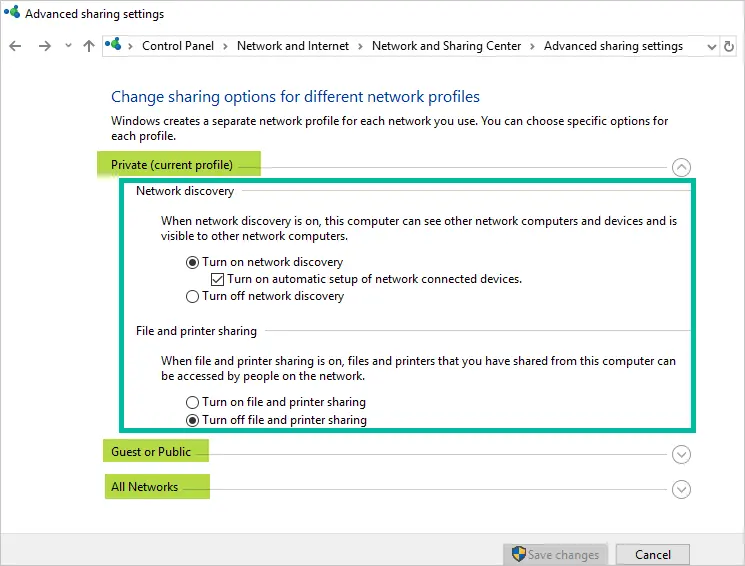
On the left pane, go to “Change advanced sharing settings”. You will see three groups for private, guest or public and all networks profile. Expand the profile you want to change the settings and choose the available options.
Private Network Profile Settings
Let us expand the “Private” settings by clicking the down-facing arrow. You can check the “Turn on network discovery” to allow your PC to find other computers and devices on the network. This will also make your computer visible to other computers in the network. Check the “Turn on file and printer sharing” option to allow access to shared resources.
Public Network Profile Settings
To enhance privacy on public networks, expand the “Public” settings and turn off both the network discovery and file & printer sharing.

All Network Profile Settings
Click on the “All Network” option to expand the section. You will see bunch of options related to sharing of the resources that will affect both private and public network profiles.

- Turn on public folder sharing to allow read and write access to public files.
- Turn off the option to limit the access to users logged on to your computer.
- Click the link under the “Media streaming” option where you can turn on/off the feature to allow users to control access to multimedia files on your computer.

- Under the “File sharing connection”, pick a file encryption option to protect the sharing connection.
- Finally, set “Password protected sharing” to allow resources sharing with only authenticated users.
- After changing the settings, click the “Save changes” button at the bottom of the window.
Customizing the Current Connection
Now, let’s check how to customize the current active network connection. Go back to main screen of “Network and Sharing Center” and click on your current connection. It will be the name of your Wi-Fi name showing as a link against “Connections:” option.
- This opens a “Wi-Fi Status” dialog, displaying information about the current connection. You can check the details including connection duration, connection speed and signal strength for wireless connections among other details.
- Additionally, you can use the “Disable” button to disconnect your PC from the network and “Diagnose” button to troubleshoot and fix connection issues.

- To enable/disable connection sharing, go to “Properties” and then select the “Sharing” tab.
- Under the “Internet Connections Sharing”, you may tick the boxes to allow other users to connect to the internet through your PC, as well as to control the shared connection. Click “Ok” to confirm the changes.

- Close the network status dialog.
Setting Up New Network or Connection
Go back to the main screen of the Network and Sharing Center. Click on the “Set up a new connection or network” link under the “Change your network settings” section. This gives you the option to configure an access point or a router and to manually set up a dial-up or VPN connections.

From the resulting set-up wizard select the “Connect to a workplace” option and click “Next”. On the next screen, choose an option to create a new connection. This will give you two options to connect to a workplace network remotely:
- Either through a VPN over the internet or
- Directly through a dial-up connection.

Select one of the options and follow the wizard to finish creating a new network connection.
For the other options:
- “Connect to the internet” – To manually connect to the internet via a dial-up or broadband network.
- “Set up a new network” – Used to view and configure routers and access points.
- “Manually connect to a wireless network” to add and connect to a new wireless network.
Troubleshooting Network Problems
The simplest way to identify a network problem is by clicking the “Change adapter settings” option. This displays all your “Network connections” and their status.
- If a network has an issue, you will notice a red “X” mark attached. To diagnose the problem, click on the network and click “Diagnose this connection” from the menu above the list.

- This will open Windows Network Diagnostics dialog. Windows will check for errors and suggest a solution. Follow the instructions to fix the network adapters error.

Conclusion
Windows 10 Network and Sharing Center gives you full control over your network connections. It also helps to enhance resource sharing and privacy. The list above is not exhaustive. You can do much more by tweaking these settings to achieve the best performance.